Installation Instructions
1
Download Installer 
2
Run Setup 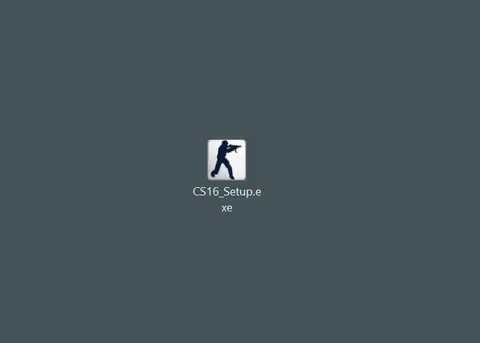
3
Choose installation folder 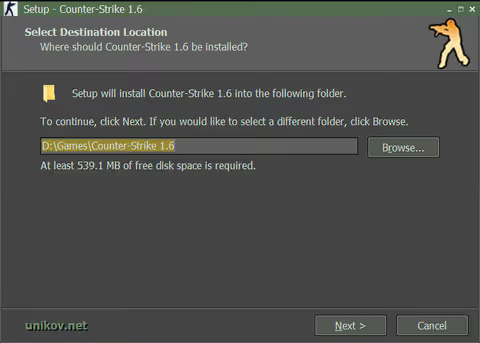
4
Select language 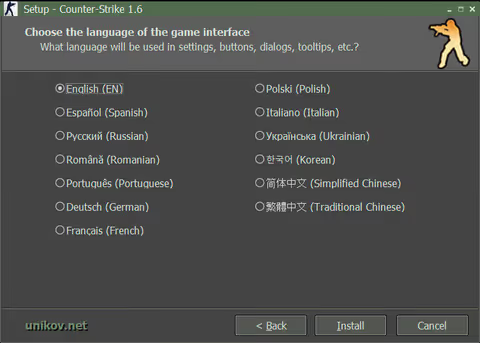
5
Complete the installation and launch the installed game 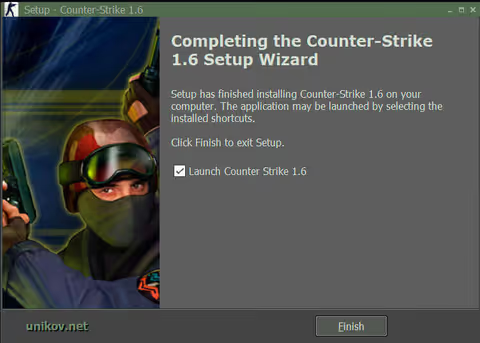
The fallocate command is best for instant creation without writing zeros.
When working with large files or testing storage solutions, it's often necessary to create a test file of a significant size. In this post, we'll show you how to create a 50 GB test file quickly and easily. Whether you're a developer, QA engineer, or just someone who needs to test their storage solutions, this guide is for you. 50 gb test file
A 50GB file is unwieldy for email or FAT32 drives (which cap at 4GB). Here is how to split it. The fallocate command is best for instant creation
A is a massive, standardized unit of data used primarily by system administrators, developers, and network engineers to stress-test the limits of hardware and software. Whether you are benchmarking a new NVMe SSD, testing the throughput of a 10Gbps fiber link, or ensuring your cloud storage can handle multi-gigabyte uploads, a file of this size provides a sustained load that smaller files cannot. Why Use a 50 GB Test File? Whether you're a developer, QA engineer, or just
Many providers allow "multipart upload" splitting. A 50GB file will force the upload to split into at least 50 parts (default 5MB part size). You can diagnose exactly which part failed if the upload crashes.
You don't need to download a 50 GB file; you can create a "dummy" file locally using command-line tools. This is safer and faster than downloading large files from the internet.
The fallocate command is best for instant creation without writing zeros.
When working with large files or testing storage solutions, it's often necessary to create a test file of a significant size. In this post, we'll show you how to create a 50 GB test file quickly and easily. Whether you're a developer, QA engineer, or just someone who needs to test their storage solutions, this guide is for you.
A 50GB file is unwieldy for email or FAT32 drives (which cap at 4GB). Here is how to split it.
A is a massive, standardized unit of data used primarily by system administrators, developers, and network engineers to stress-test the limits of hardware and software. Whether you are benchmarking a new NVMe SSD, testing the throughput of a 10Gbps fiber link, or ensuring your cloud storage can handle multi-gigabyte uploads, a file of this size provides a sustained load that smaller files cannot. Why Use a 50 GB Test File?
Many providers allow "multipart upload" splitting. A 50GB file will force the upload to split into at least 50 parts (default 5MB part size). You can diagnose exactly which part failed if the upload crashes.
You don't need to download a 50 GB file; you can create a "dummy" file locally using command-line tools. This is safer and faster than downloading large files from the internet.